
What Are The Differences Between Smart Toilets and Regular Toilets?
Functionality and User Experience:
With social development and technological advancements, people are increasingly accepting and using smart products. In the future, the smart toilet market is expected to continue growing, becoming a mainstream product in the bathroom market.
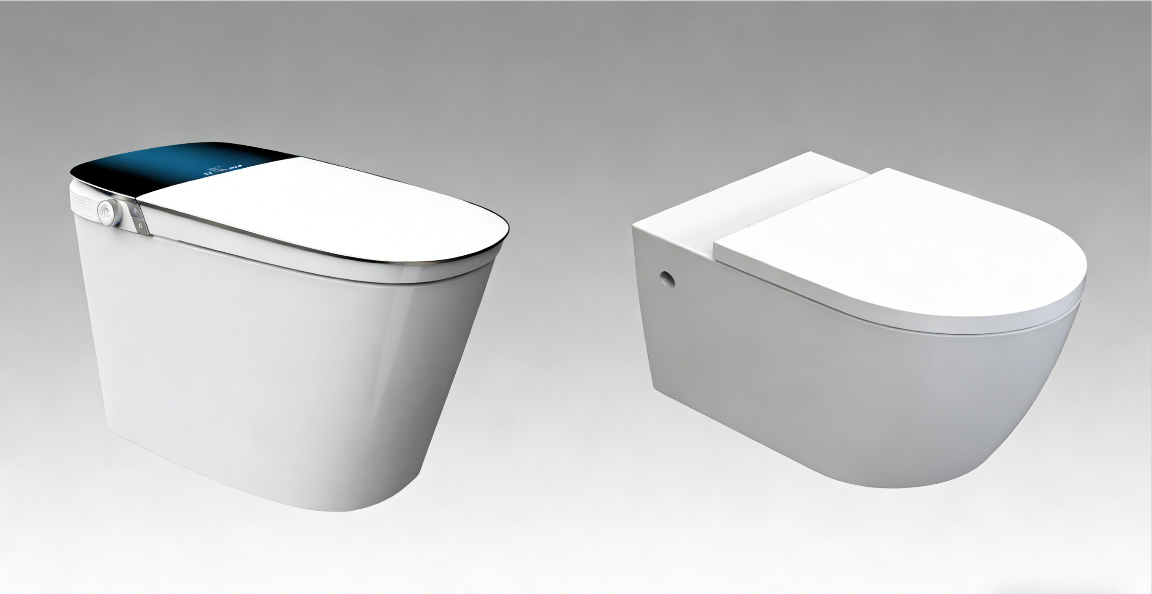
Ordinary toilets have limited functionality, primarily for excretion and flushing. While some feature water-saving designs, the overall user experience remains basic. Users must manually open the lid, wipe, and flush, a relatively traditional process.
Smart toilets, on the other hand, offer a wider range of functions, typically including warm water washing, heated seats, drying functions, and automatic lid opening and closing.
Warm water washing is more hygienic than traditional paper wiping and reduces skin irritation, making it especially suitable for the elderly, pregnant women, or those with anorectal conditions. Heated seats provide comfort in cold winters, eliminating the "cold irritation." Automatic flushing and sensor-activated lids further enhance convenience, truly freeing up users' hands. Furthermore, some high-end smart toilets are equipped with water purification, deodorization systems, and nighttime lighting, further improving the user experience.
Cleaning and Maintenance:
Cleaning ordinary toilets is relatively simple; users can clean them directly with brushes or other tools. Repairs are also relatively easy, and replacement parts are inexpensive. However, ordinary toilets have certain shortcomings in terms of hygiene. If not cleaned regularly, dirt can easily accumulate on the toilet seat and inner wall, breeding bacteria.
Smart toilets have a complex internal structure with electronic components, making cleaning and maintenance relatively troublesome. Repair costs can be high if a malfunction occurs. However, some smart toilets have self-cleaning functions, reducing bacterial growth, and some models even have automatically retracting nozzles for sterilization.
Price and Long-Term Costs:
Ordinary toilets are relatively affordable, generally ranging from several hundred to several thousand yuan, with low initial purchase costs. During use, apart from occasional repairs and parts replacements, there are basically no other additional costs.
Smart toilets are typically more expensive, with basic models costing around a thousand yuan and high-end products reaching tens of thousands of yuan. In the long run, smart toilets may increase water and electricity bills, but reducing toilet paper usage can save money to some extent.
Installation Requirements:
Ordinary toilets are relatively simple to install, requiring no power supply, only ensuring the drainage pipe is connected correctly, and have low water pressure requirements. This makes ordinary toilets easy to install in various environments, especially suitable for older homes or environments with unstable power supplies.
Smart toilets require a power source, necessitating a suitable power outlet in the bathroom during installation, and proper waterproofing and leakage protection measures must be taken. Smart toilets also have certain water pressure requirements; insufficient water pressure in tankless smart toilets may affect flushing performance. However, some smart toilets come with built-in water tanks or pressure boosting technology, solving the problem of insufficient water pressure in high-rise buildings or older communities.
Hygiene and Health:
Ordinary toilets, if not cleaned regularly, are prone to bacterial growth, especially on the toilet seat and inner walls where dirt can easily accumulate. Traditional wiping with paper is insufficient to thoroughly remove bacteria and dirt, potentially leading to skin infections.
Smart toilets use running water for flushing, which is cleaner than wiping with paper, effectively reducing bacterial and dirt residue and helping to prevent anorectal diseases and maintain personal hygiene. Some smart toilets have a foam shield function that prevents water splashing and dirt adhesion, providing sterilization and deodorization effects, further improving bathroom air quality. In addition, the sterilization and disinfection function of smart toilet seats effectively inhibits bacterial growth, providing a more hygienic toilet environment.
User Preferences and Market Trends:
For users who prioritize practicality, have limited budgets, or don't have high demands for high-tech features, ordinary toilets are a reliable choice. They value the product's cost-effectiveness and stability, believing that ordinary toilets are simple to use and have low maintenance costs. However, as people's living standards improve and they pursue a healthier and more comfortable lifestyle, more and more users are beginning to choose smart toilets.
Smart toilets significantly improve toilet comfort, especially for the elderly, pregnant women, and children. Features such as automatic flushing and foot-activated lids reduce contact between the body and the toilet, avoiding the embarrassment of forgetting to flush. The market is seeing an increasing number of brands and models of smart toilets, with continuous technological innovation and increasingly rich functions to meet the needs of different users. For example, some lightweight smart toilets have attracted many consumers with their relatively low prices and practical functions.